
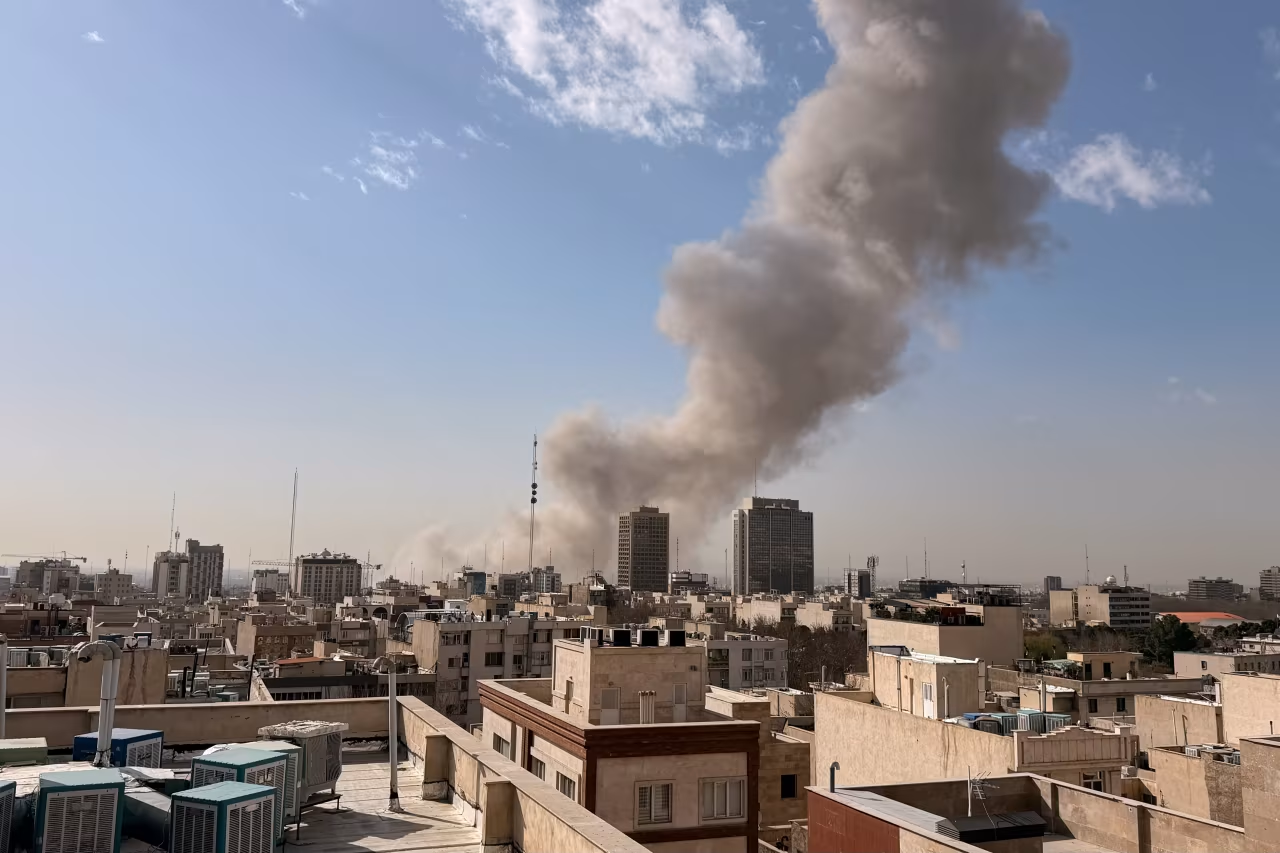
In a dramatic and unexpected development on February 28, 2026, Israel announced it had launched a ‘pre-emptive military strike against Iran.’ This marks one of the most serious escalations in the long-running tensions between Tehran, Jerusalem, and Washington.
Tehran and Other Iranian Cities in Smoke
Early on Saturday morning, explosions were reported across Tehran, the Iranian capital, including some areas near major government buildings. In media reportage thus far, thick plumes of smoke were seen rising from central districts. Following this, Iranian media acknowledged multiple blasts without immediately specifying any recorded casualties.

According to Iranian media outlets, missiles struck regions like the University Street and the Jomhouri area. Thus, suggesting coordinated targeting across multiple sites.

Israel Declares State of Emergency
Israel’s Defence Minister, Israel Katz, said the operation was designed as a pre-emptive strike. He further explained that the attack is “to remove threats to the State of Israel.” This indicates a fear of imminent retaliation from expected from Tehran in a short time.
Hours into the attack, Israel declared a Nationwide State of Emergency. This was accompanied with sirens sounding throughout the country and civil defense warnings urging citizens to stay close to shelters. Schools and many public services were suspended, and the country’s airspace was completely shut to civilian flights.
The Role of The United States in All This

Multiple international reports confirm that the United States participated in the strikes alongside Israel. Although officials have been cautious in their public statements, Prez. Donald Trump makes this apparent in a recent press address. Both nations, U.S. and Israel, have built up significant military assets in the region in recent weeks — including warships and fighter jets — amid failed diplomatic efforts to resolve nuclear and missile disputes with Iran.
In the immediate aftermath, not only Israel but also Iran and neighbouring countries like Iraq closed their airspace, highlighting the scale of regional disruption.
What Does This Say About Diplomacy?
The strikes come against a backdrop of renewed nuclear negotiations between Washington and Tehran that took place earlier this month, but which ultimately faltered over disagreements on linking Iran’s missile program with its nuclear activities. This therefore suggest a very fragile diplomatic climate where tensions can easily escalate.
Iran has insisted its nuclear program is peaceful. Western allies however find this unbelievable as Iran has historically threatened retaliation against U.S. forces in the region if attacked.
Interestingly, a few hours into the attack, President Donald Trump was reportedly seen in a video assuring the world that “…this terrorist regime (Iran) can never have a nuclear weapon.” He also urged Iranians to stand up for their freedom; one he alludes giving them following these attacks.
What Does This Mean?
This escalation represents a significant widening of conflict beyond previous exchanges over the past two years. The involvement of U.S. forces alongside Israel amplifies the risk of a wider regional conflict, potentially drawing in allied and proxy groups across the Middle East.
For global audiences, this crisis underscores how quickly diplomatic tensions can turn into full-blown military confrontation — and how volatile the situation in the Middle East remains, even after decades of negotiation and conflict.


